Best Time to Visit Zhangjiajie National Forest Park: Unlock Floating Mountains & Misty Magic (2026 Insider Guide)
- The Two Prime Seasons: Best Time to Visit Zhangjiajie National Forest Park
- Winter (December – February): The Quiet Kingdom of Ice
- Summer (June – August): Rainforest Vibes and a Gamble on Mist
- Navigating China's Public Holidays: The Crowd Survival Guide
- Ground-Level Tips for a Smooth Journey
- Quick Answers Before You Go
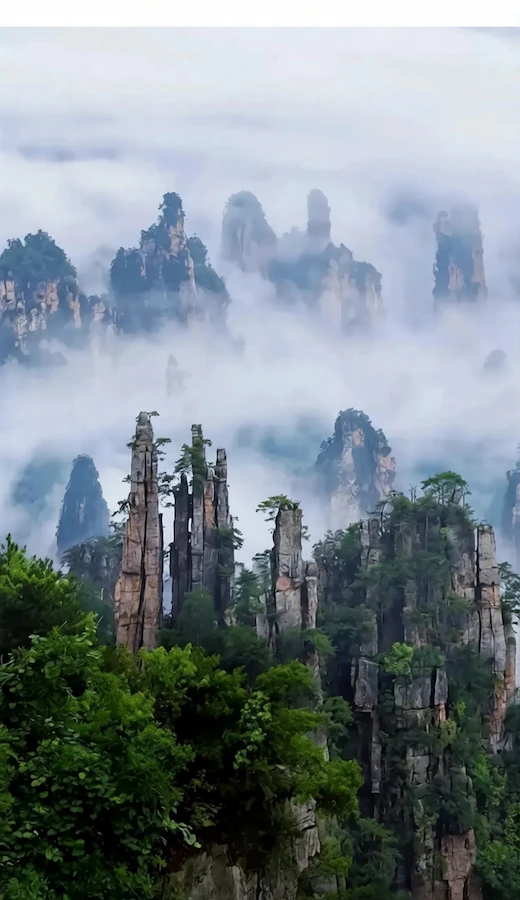
So you’re dreaming of those jagged sandstone pillars that inspired Pandora in Avatar—and you’re trying to nail down the absolute best time to visit Zhangjiajie National Forest Park. Smart move. Timing isn’t just about checking a calendar here; it’s the difference between standing above a crystal-clear sea of clouds or staring at a wall of thick white fog. Let’s walk through the year together, based on weather, scenery, and the dreaded crowd factor, so you can pick your perfect window.
The Two Prime Seasons: Best Time to Visit Zhangjiajie National Forest Park
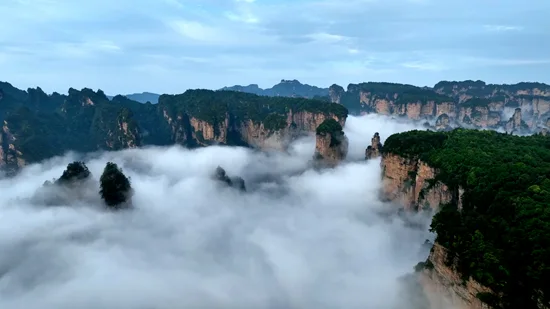
If you want the Goldilocks combo of comfortable weather and postcard-perfect scenery, circle these two windows on your calendar. This is when the Zhangjiajie National Forest Park truly shines.
Spring (April – May): Watercolor Mornings and Fresh Blooms
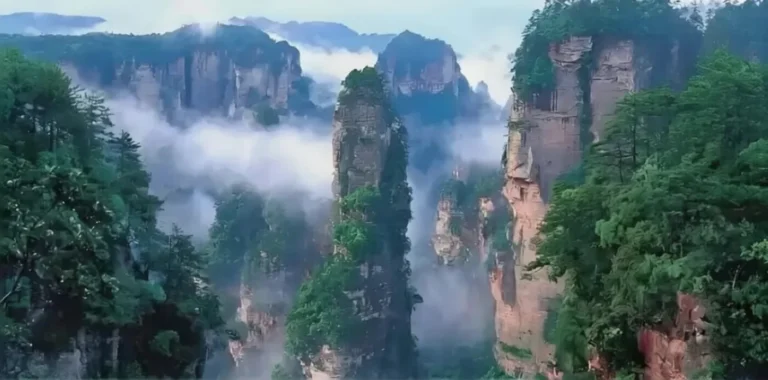
The mountains shake off the winter chill. Temperatures hover between a lovely 15-20°C (59-68°F), and the rain, while possible, usually comes as a gentle mist rather than a downpour.
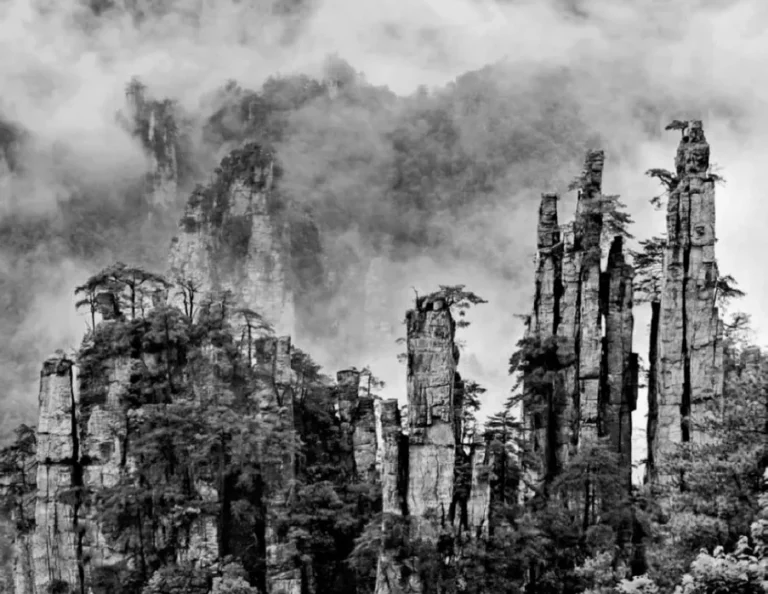
This is a season of soft edges. You’ll wake up to thin veils of fog weaving through the stone columns—it feels like walking inside an ancient Chinese ink painting. The forests along Golden Whip Stream burst with bright new green leaves, and wildflowers dot the trailsides. You can actually hear the birds instead of just a sea of selfie sticks. While it’s the start of the busy season, it’s nowhere near the human tsunami of July. If peace and quiet with a side of blooming beauty is your vibe, spring is calling.
Autumn (September – November): Crisp Air and Colorful Drama
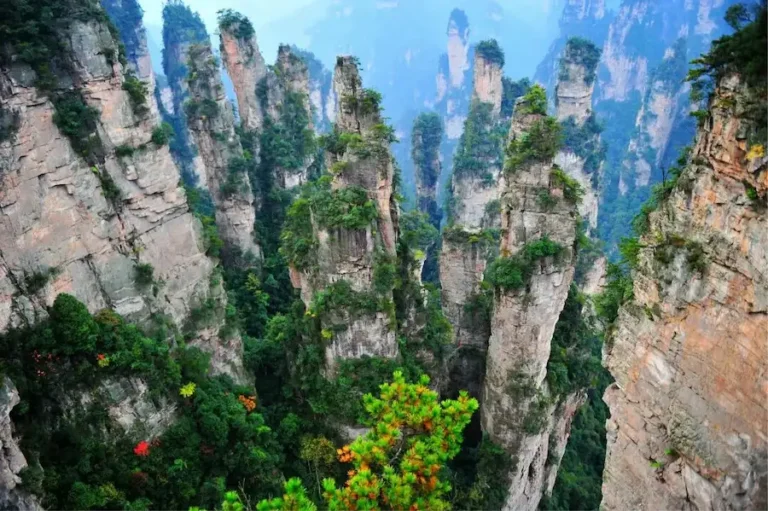
This is where photographers weep happy tears. The humidity drops, the sky turns a piercing cobalt blue, and the visibility stretches for miles. Those iconic quartz-sandstone pillars finally show off their sharp, dramatic outlines without a haze to blur them.
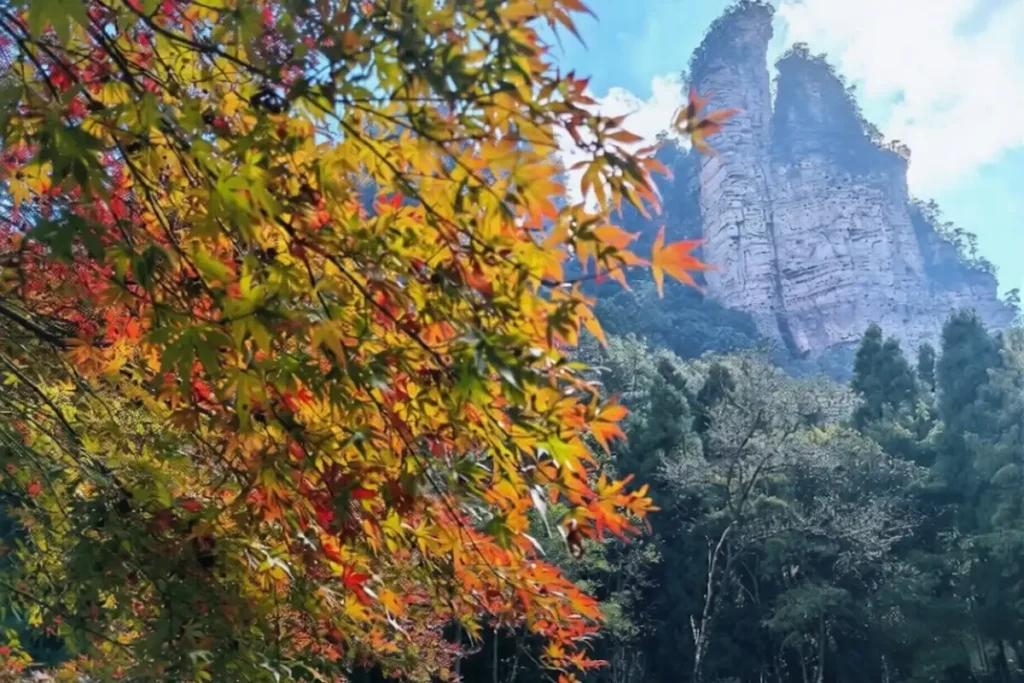
As October rolls into early November, the forest swaps its uniform green for splashes of red and gold. The contrast of fiery leaves against gray stone is unreal. Bonus: This is statistically one of the best times to catch a sunrise over a churning cloud ocean. Just keep in mind that the first week of October is National Day Golden Week—avoid that specific week like it’s a trail full of wild monkeys, and you’ll have a flawless trip.
Winter (December – February): The Quiet Kingdom of Ice
What if you’re willing to trade warmth for solitude?
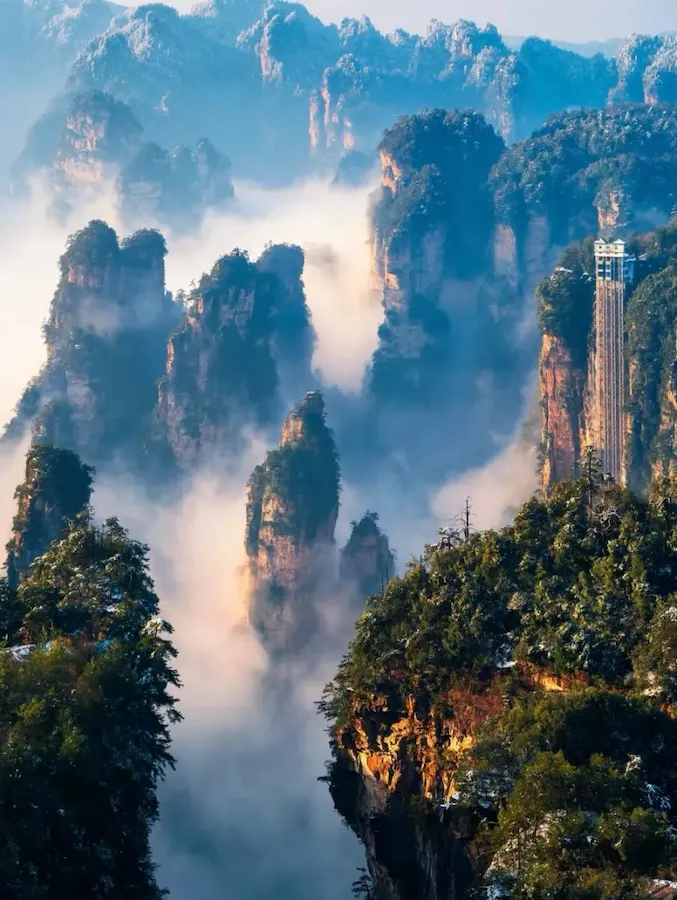
This is the park’s best-kept secret for those who don’t mind a chill. Temperatures dip near freezing (bring layers!), but if you wake up to a dusting of snow, you’ve won the lottery. The peaks transform into silent, silver sentinels, and the trees become ghostly white with rime ice. The visitor count plummets. You might have an entire viewing platform at Zhangjiajie Avatar Mountains almost to yourself. It feels private and sacred.
Heads up: Icy paths can be slippery, so sturdy hiking boots are non-negotiable here. Also, in extreme weather, cable cars like the Bailong Elevator might pause operations for safety. Keep an eye on the forecast.
Summer (June – August): Rainforest Vibes and a Gamble on Mist
Let’s set realistic expectations for the summer months. This is the rainy season and Chinese school holidays rolled into one sweaty package.
You might get lucky: A heavy downpour clears the air and leaves behind a spectacular cloud sea that spills over the cliff edges. The vegetation is at its most lush and emerald green.
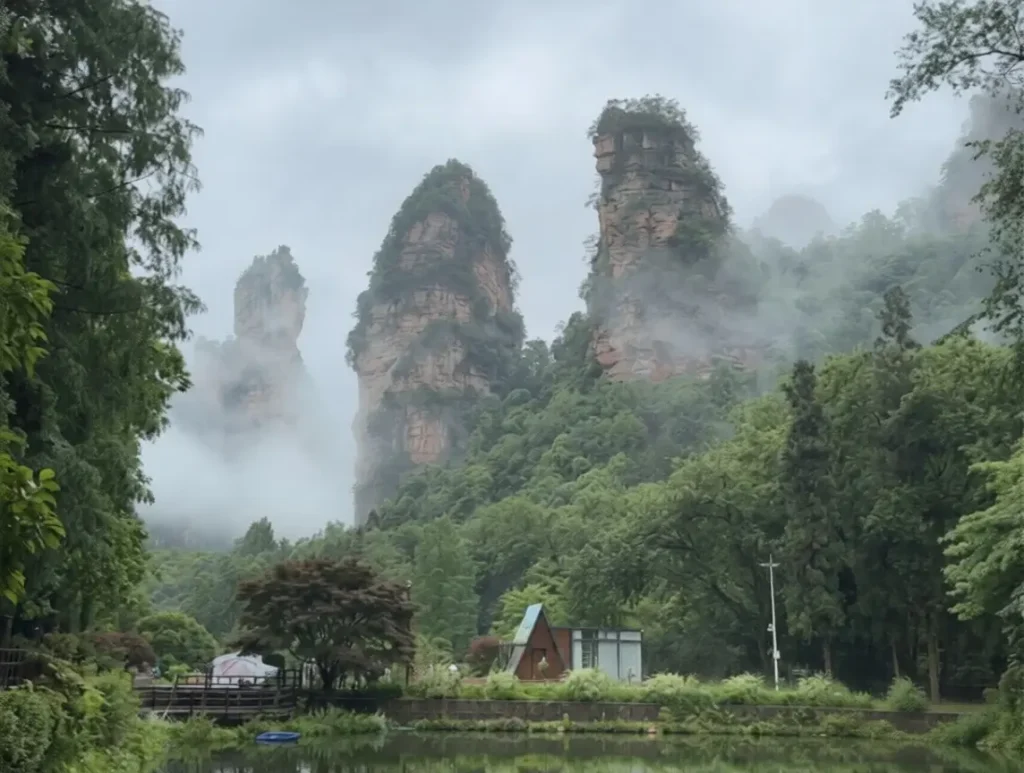
You might get fogged in: There’s a very real chance you’ll pay ¥72 (about $10 USD) for the glass skywalk only to see nothing but a white blanket of vapor. That’s just how it goes here in July. And the lines? You could easily spend 90 minutes waiting for the Bailong Elevator. If summer is your only option, pack a poncho and your patience. The payoff of a post-rain view is worth the risk, but only if you’re mentally prepared.
Navigating China’s Public Holidays: The Crowd Survival Guide
No matter which season you land on, cross-reference your dates with this list. During these times, Zhangjiajie National Forest Park best time to visit advice is simple: Don’t. The pathways turn into slow-moving rivers of people.
May Day Holiday: Usually May 1st (and a few days surrounding it).
National Day “Golden Week”: October 1st – 7th. (Seriously, just don’t).
Chinese New Year (Spring Festival): Falls in late January or February.
Ground-Level Tips for a Smooth Journey
The Monkey Situation (It’s Real)
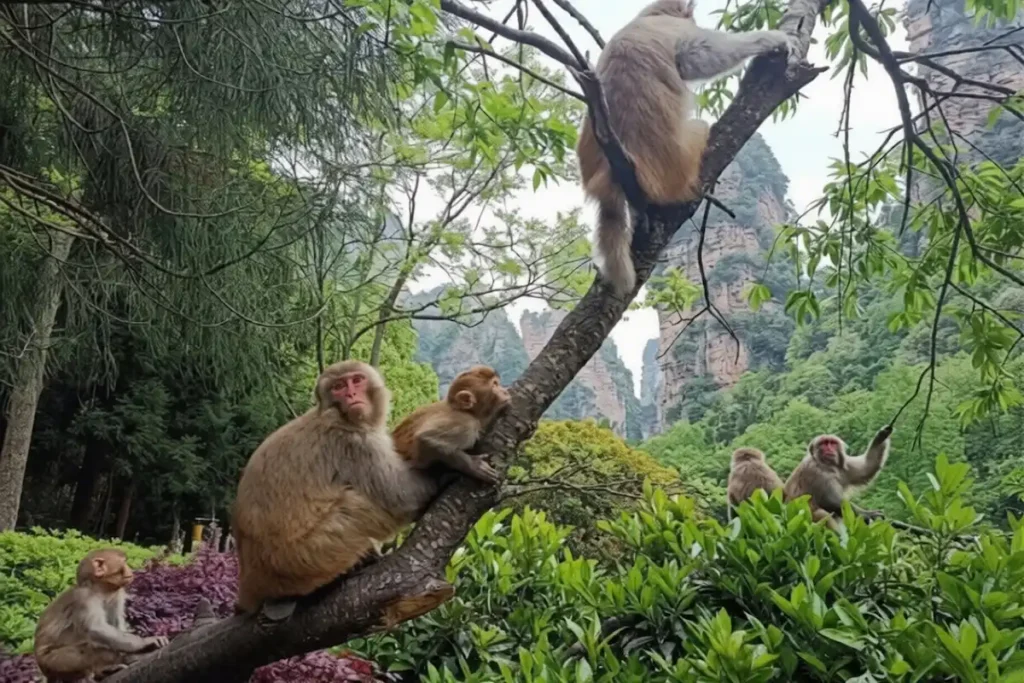
Along Golden Whip Stream, those fluffy macaques are not pets. They are highly skilled snack thieves. Do not carry food in clear plastic bags. Do not open your zipper in front of them. They see it, they want it, they snatch it. You’ve been warned with a smile.
You Will Walk. A Lot.
Even with the world’s tallest outdoor elevator and multiple cable cars, Zhangjiajie is a stair-master workout. The park is enormous. Invest in shoes that you’d trust with your life on a wet rock. The park entrance fee is ¥227 (approx. $31 USD) , but here’s the good news: that ticket is valid for four consecutive days. You don’t have to rush it. Stay near the Wulingyuan National Park entrance gate and come back fresh each morning.
Saving Your Budget (and Your Legs)
Bailong Elevator (One-way): ¥72 (~$10 USD)
Tianzi Mountain Cable Car (One-way): ¥72 (~$10 USD)
Mini Shuttle Buses inside the park: Free with your ticket. Use them wisely to hop between trailheads.
Quick Answers Before You Go
Is Zhangjiajie National Forest Park best time to visit in winter for snow photos?
Absolutely. If you’re chasing snow-dusted pillars and rime ice, January and February offer the best odds. Just pack thermal layers and check the weather for closure updates.
What’s the best time to visit Zhangjiajie National Forest to see fall colors?
Aim for the last week of October through mid-November. The maples turn brilliant red, and the sky stays clear. It’s arguably the most photogenic window of the year.
When is the best time to visit Zhangjiajie National Park to avoid rain and fog?
Mid-September to late October is your safest bet for dry, crisp weather with the highest chance of seeing those far-off peaks in sharp relief. For more details on navigating the area, you can check out this handy guide on how to get to Zhangjiajie.
Is it worth adding a side trip to the glass bridge?
Definitely, if you have the time. The views from the canyon floor are just as impressive as the walk across the glass. You can read more about the specifics of the Glass Bridge in Zhangjiajie National Forest Park to see if it fits your itinerary.
The mountain gods here play by their own weather rules, and that’s part of the thrill. Whether you arrive to a swirl of mist or a sky painted orange at sunset, you’re stepping into a landscape that feels less like Earth and more like a dream someone forgot to wake up from. Go ahead, book that ticket—those peaks have been standing there for millions of years, and they’re ready for their close-up.