
Zhangjiajie National Forest Park: My Two Days Walking Through an “Alien” World
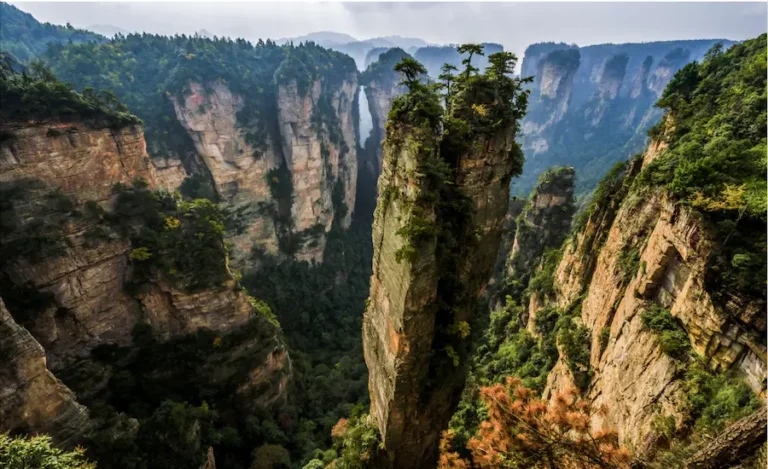
I remember the moment I stood at the Enchanting Terrace in Yuanjiajie, staring at those stone pillars for the first time—it felt like someone had ripped the spine straight out of a planet and haphazardly planted it here. Morning mist, soft as cotton wool, swirled around the waists of towering rock columns. In that instant, I completely understood why Avatar came here for inspiration. This place… it really doesn’t feel like Earth.
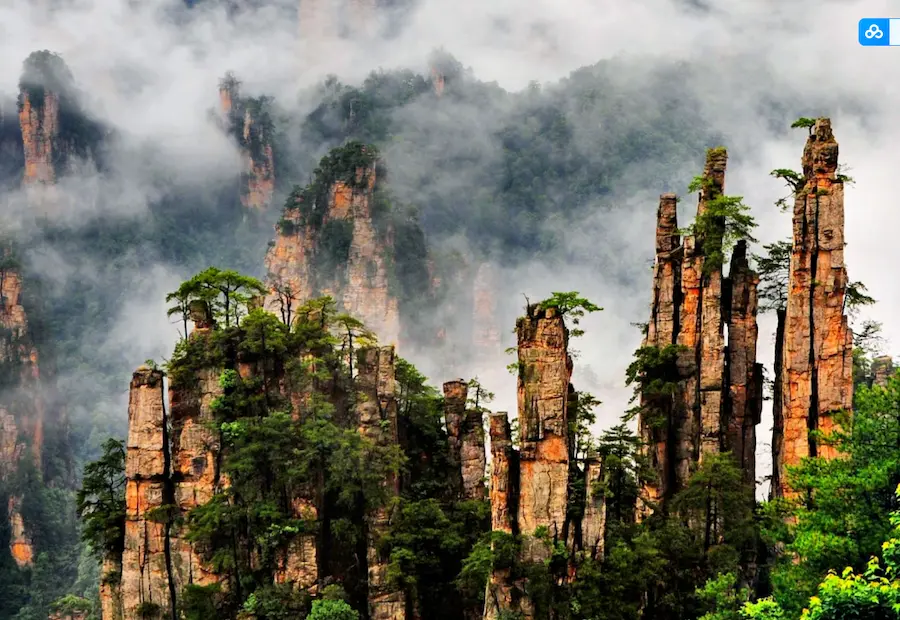
If you’re planning a trip to the massive Zhangjiajie National Forest Park (all 264 square kilometers of it) and feel overwhelmed by the complex trail network, don’t worry. I spent days hiking its main routes, and my fresh, personal tips might just save you a headache.
Tickets & Gates: Where Your Adventure Begins
The park entry ticket costs 227 RMB (about $32 USD) and is valid for four consecutive days. It includes unlimited rides on the park’s eco-bus system—a true lifeline shuttling between mountain spots. There are five entrance gates, and your choice sets the tone for your first day.
East Gate (Flagship Gate/Wujiayu): The most popular gate with the best facilities. Most hotels and restaurants are in the nearby Wulingyuan Town. If you prioritize convenience or are short on time, start here.
South Gate (Forest Park Ticket Station): My personal favorite. You step right into the “Great Oxygen Bar” Square and the start of the Golden Whip Stream—immersing you in forest-and-river vibes instantly. You feel closer to the peaks right away.
West Gate (Yangjiajie) & North Gate (Tianzi Mountain): Quieter, with fewer tour groups. Ideal if you seek peace or are staying nearby.
Middle Gate (Zimugang): Near the Water-Rimming-Four-Gates area, often used as a mid-point or exit.
My advice? Don’t overthink it. Choose based on your accommodation and what you want to see first. I picked the South Gate for a “reverse route” and perfectly avoided the morning crowds.
Day 1: Streams, Monkey Gangs & the “Floating Mountains” (South Gate Entry, Staying on the Summit)
I took a taxi from Zhangjiajie West Station straight to the South Gate. The moment I scanned my ID and entered, the damp, fresh air wrapped around me—a distinct mix of wet earth, leaves, and stream water. Instead of heading for a cable car, I walked straight to the Golden Whip Stream.
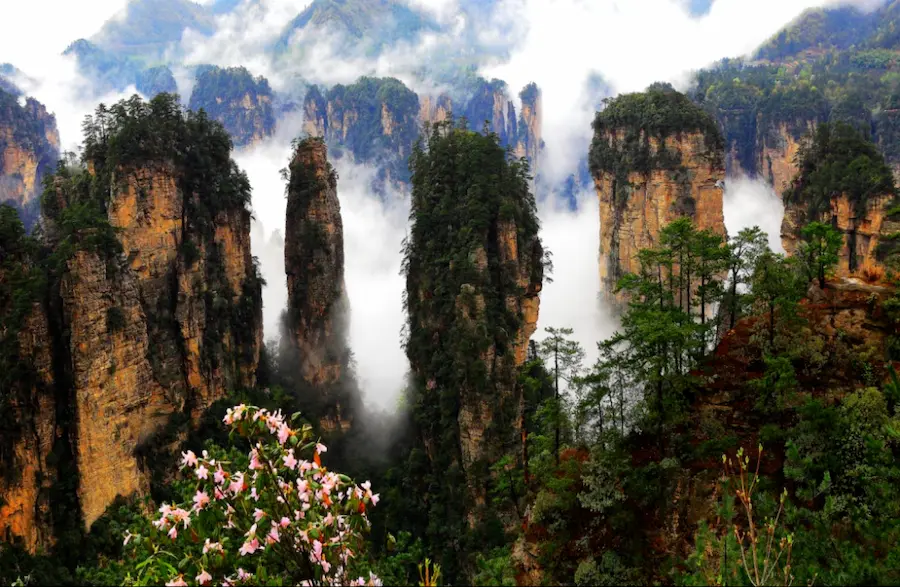
This flat path following a crystal-clear, ice-cold stream is the perfect warm-up. Sheer, bizarre peaks rise on either side like giant bonsai. But the local “residents”—the monkeys—will snap you to attention. They’re savvy, eyeing plastic bags and snack packages. Pro tip: Use a backpack with secured zippers, and don’t carry food in your hands. If they block the path, walk past calmly—no eye contact, no teasing. Honestly, they snatch things faster than you can react, so prevention is key.
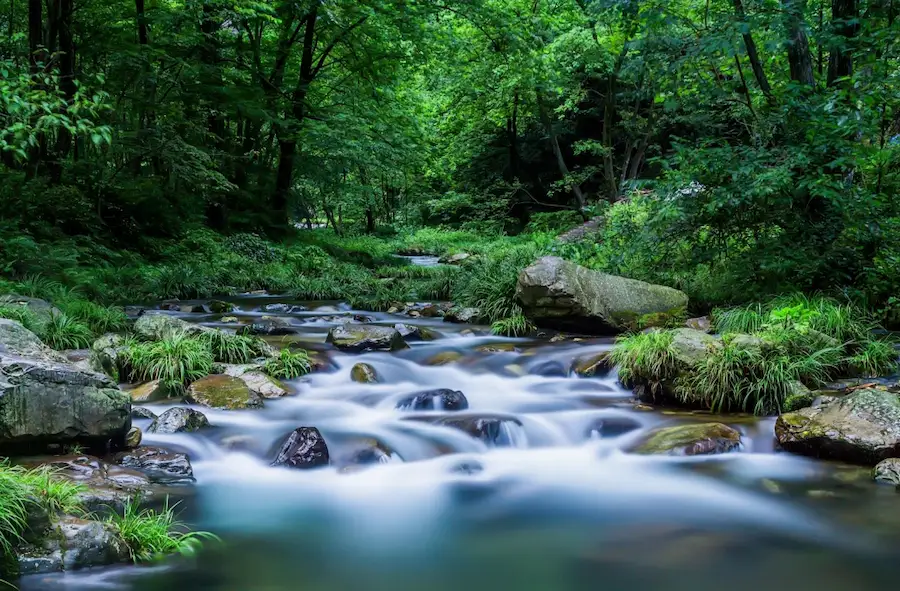
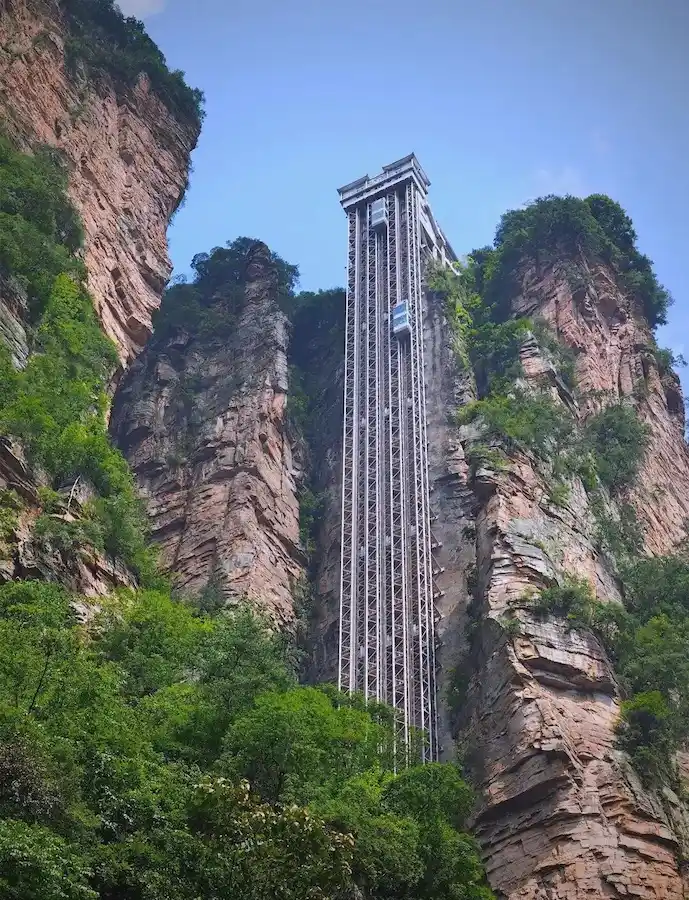
The full stream walk is 7.5 km (about 3 hours). If you have a car parked at the South Gate, you might turn back at “Zicao Tan.” I, however, ambled all the way to the end at “Water-Rimming-Four-Gates,” where I hopped on an eco-bus bound for the legendary engineering marvel—the Bailong Elevator.
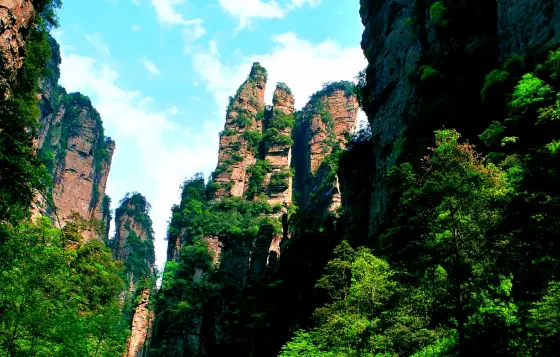
After a short queue, I squeezed into the glass cabin. As it launched, my stomach dropped, and the gray rock face outside suddenly fell away. Then, dozens of massive, green pillar peaks “exploded” into view on the horizon, standing right before me. That 60-second visual shock is indescribable and absolutely worth experiencing once.
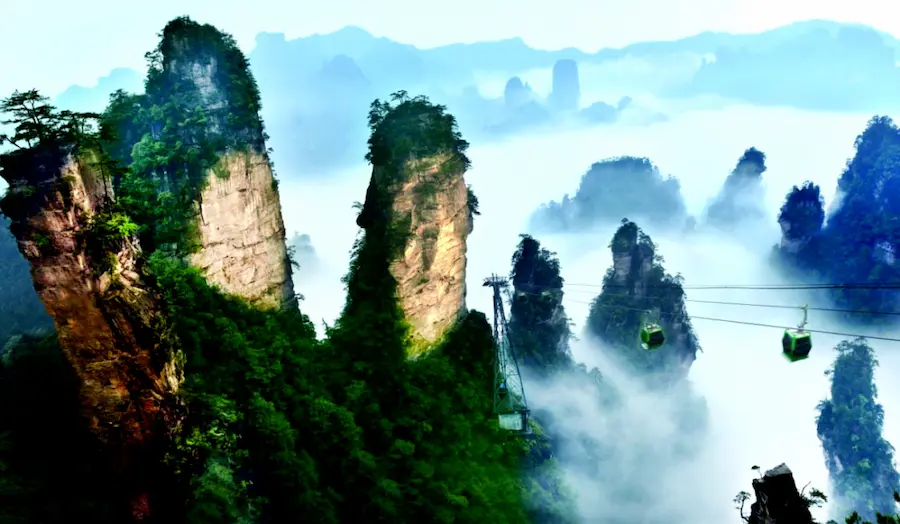
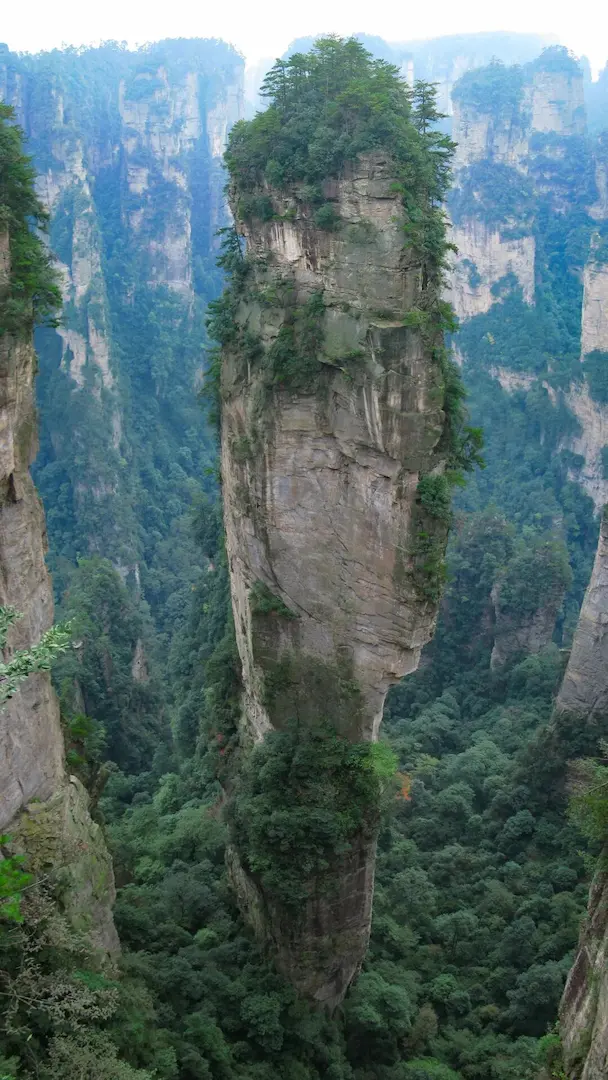
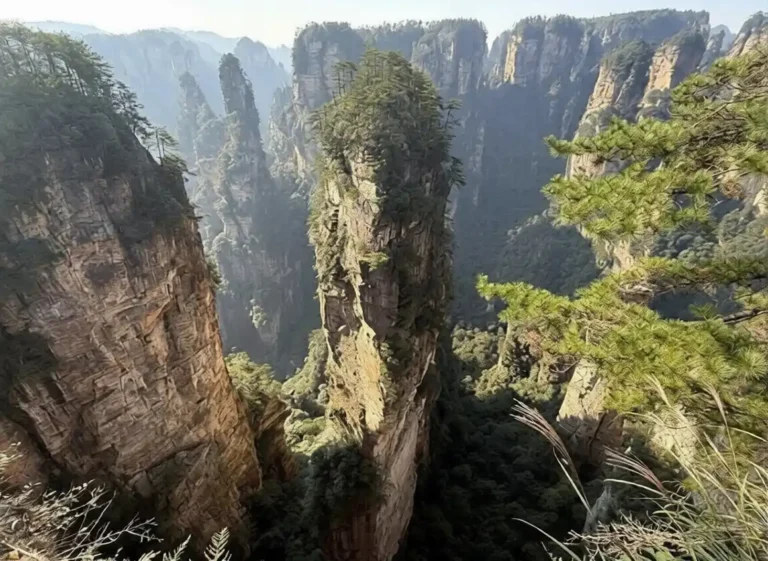
Exiting the elevator, I was on the summit of Yuanjiajie. This is the main event. Walking the cliffside plank path, the “Avatar Hallelujah Mountain” (Qiankun Column) stood there, silent and imposing, just like in the movie. The view from the Enchanting Terrace was breathtaking—a valley of stone pillars like a petrified army. Then there’s the First Bridge Under Heaven, a natural stone bridge connecting two peaks. The walkway is narrow, the wind howls, and looking down is a sheer drop. Full disclosure: if you’re severely afraid of heights, maybe don’t look down while crossing. Just hold your camera tight and move!
By evening, I took an eco-bus to Tianzi Mountain and checked into a guesthouse there. All for the next morning’s sunrise.
Day 2: Sunrise, A Sea of Peaks & A Painted Gallery (Summit Tour, East Gate Exit)
I woke up before dawn. The mountain morning was bracingly cold—I bundled up (crucial: it’s 8-10°C/14-18°F colder up there!). At the viewing platform, watching the sun jump from a rolling sea of clouds and the tips of countless peaks, painting everything gold… that’s a feeling I’ll remember.
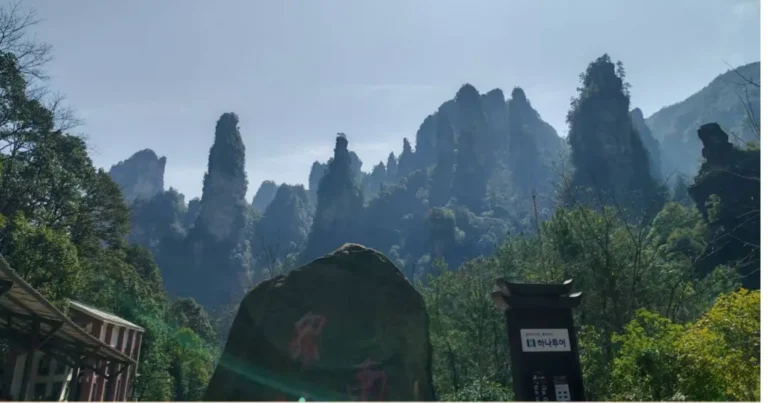
After sunrise, I explored Tianzi Mountain at a leisurely pace. The statue of Marshal He Long gazes over the peaks. Scenes like “Fairies Presenting Flowers” and the “Imperial Brushes” are incredibly lifelike—the latter, with its row of thin, straight stone columns, is practically the poster image for Zhangjiajie National Forest Park. The perspective here is higher, emphasizing the vast “forest” of peaks, which feels completely different from the upward gaze in Yuanjiajie.
Next, I took the bus back to Yangjiajie (the summit areas are all connected by bus). Short on time, I quickly saw the “Natural Great Wall”—a breathtaking row of sheer rock walls. If you have more time, spots like “One Step to Heaven” are reportedly more rugged and primitive.
In the afternoon, I chose the easy way down from Tianzi Mountain—the cable car. Gliding slowly over the peaks was its own kind of bliss, like watching a slow-motion, giant-screen nature film.
Down the mountain, I entered the Ten-Mile Natural Gallery. It’s a 5-kilometer valley flanked by picturesque rocks. You can walk (30-40 mins one way) or take a sightseeing train. I opted for the train, listening to the commentary as formations like the “Herb Collector” and “Three Sisters Peaks” unfolded… To be honest, compared to the summit’s grandeur, this felt more like a delicate landscape scroll—perfect for resting your legs. I got so absorbed in photography that I missed the last train and had to walk back. But that minor mishap gifted me the valley’s serene silence and the last rays of sunset painting the stones.
From here, a short eco-bus ride took me to the East Gate exit.
Some Can’t-Miss Practical Tips
Wear Great Shoes! This is mountain terrain with lots of steps, some steep and slippery. My anti-slip hiking boots were the best investment I made.
Weather is a Moody Child. Sunny to rainy in minutes is normal. My pack always had a light windbreaker and a disposable poncho. Sunny? Lather on that sunscreen.
About Those Monkeys (Final Reminder). They are not pets. Guard your stuff, especially anything in plastic. Your backpack zippers are your last line of defense.
Extra Tickets. The entry fee covers eco-buses. Cable cars, the Bailong Elevator, and the sightseeing train cost extra. If you want convenience and have limited stamina, look into combo tickets for the major lifts.
The Time-Saving Secret: Go Early! If you want to follow my Day 1 route (Bailong Elevator up to Yuanjiajie), get to the gate by 7:30 AM. It can save you 1-2 hours of queueing.
Where to Stay? For convenience and buzz, stay near the East Gate in Wulingyuan Town (lots of food options). For peace and early park entry, try a night on the summit (near Tianzi Mountain or Yuanjiajie), but manage your expectations—accommodation is basic, and you need to plan luggage in advance.
A two-day, one-night trip like mine is really just a “highlight reel.” With three days, you could add Huangshi Village (a separate summit area) and walk the full Golden Whip Stream. But even my condensed journey through that ancient quartz-sandstone forest—walking among clouds and unreal peaks—was enough to fill both my camera and my memory.
This place looks exactly like the postcards, but only when you stand on that cliff edge, hearing the wind whistle through the stone pillars, watching the mist gather and dissolve at your feet… only then do you truly understand why the word “fairyland” might have been invented for Zhangjiajie National Forest Park. Come. Come take a deep breath of this “otherworldly” air for yourself.
4 Comments