
Zhangjiajie Sky Ladder: Climbing Qixing Mountain’s 168m Via Ferrata
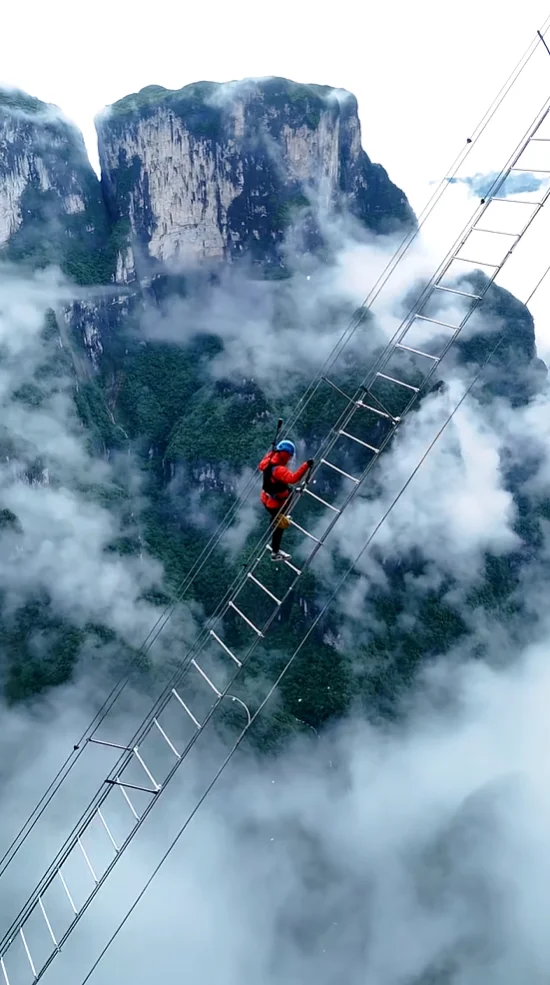
Below your feet, the gorge drops 1,480 meters. You’re standing on a ladder of hollow steel rungs, and every gust of wind makes the whole thing sway. Look up: a 168-meter iron ladder is bolted almost vertically into the cliff face, tilted at 51 degrees, so each step feels like walking straight into the clouds. This is the Zhangjiajie Sky Ladder — the Qixing Mountain Sky Ladder that has become China’s most viral high-altitude attraction since it opened in November 2024. CCTV, CNN, BBC, and France 2 have all sent crews to film it.
It looks terrifying. It is terrifying. But if you want to do it — how to get there, how it works, what it costs, and whether it’s worth the fear — this guide to the Zhangjiajie Sky Ladder breaks all of it down.
- What Is the Zhangjiajie Sky Ladder?
- Route 1 vs Route 2: Which Qixing Mountain Via Ferrata Should You Climb?
- Who Can Climb? Age, Height & Weight Limits
- How Much Does the Zhangjiajie Sky Ladder Cost?
- How to Book Your Sky Ladder Ticket
- What It Feels Like Halfway Up the Sky Ladder
- 5 Things Nobody Tells You Before You Go
- FAQ: Sky Ladder Questions, Answered
What Is the Zhangjiajie Sky Ladder?
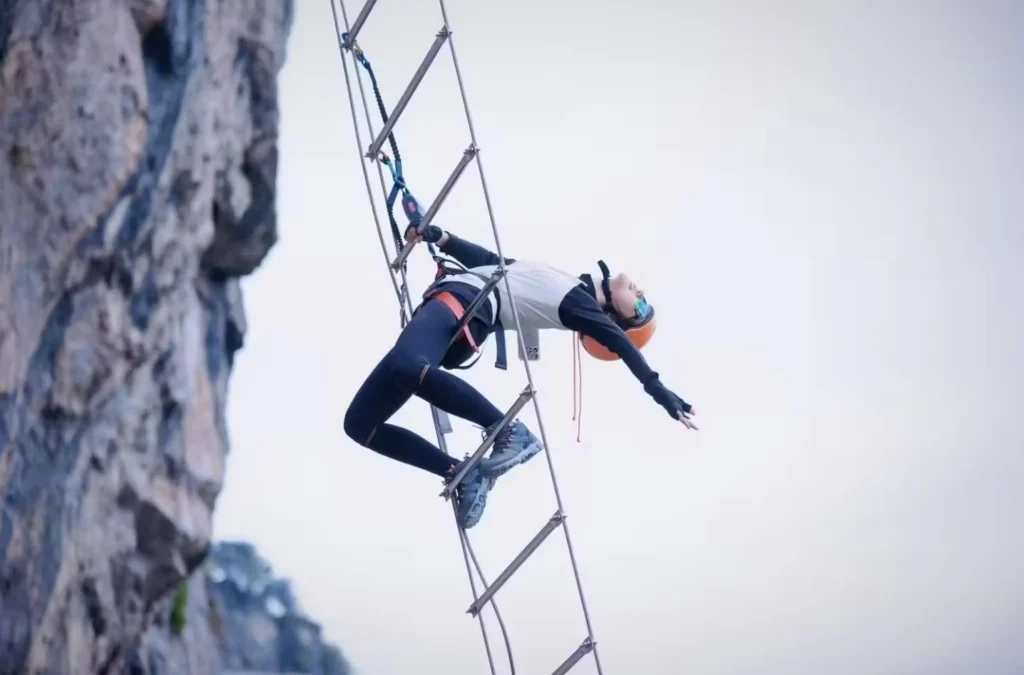
The Zhangjiajie Sky Ladder is the highlight of the Qixing Mountain via ferrata — the Zhangjiajie via ferrata, as English guides call it — a high-altitude iron path on Seven Star Mountain in Zhangjiajie, Hunan. Search “sky ladder zhangjiajie” or “sky ladder qixing mountain” and you’ll land on the same thing: a 168-meter steel ladder bolted onto a cliff about 1,400 meters up, with 278 steel rungs set at a 51-degree incline — a vertical drop equal to roughly 56 floors. It’s the climax of a via ferrata (Italian for “iron path”), a protected climbing route where you move along the rock face while clipped to a 12mm steel cable that runs the entire way. You’re not free-climbing.
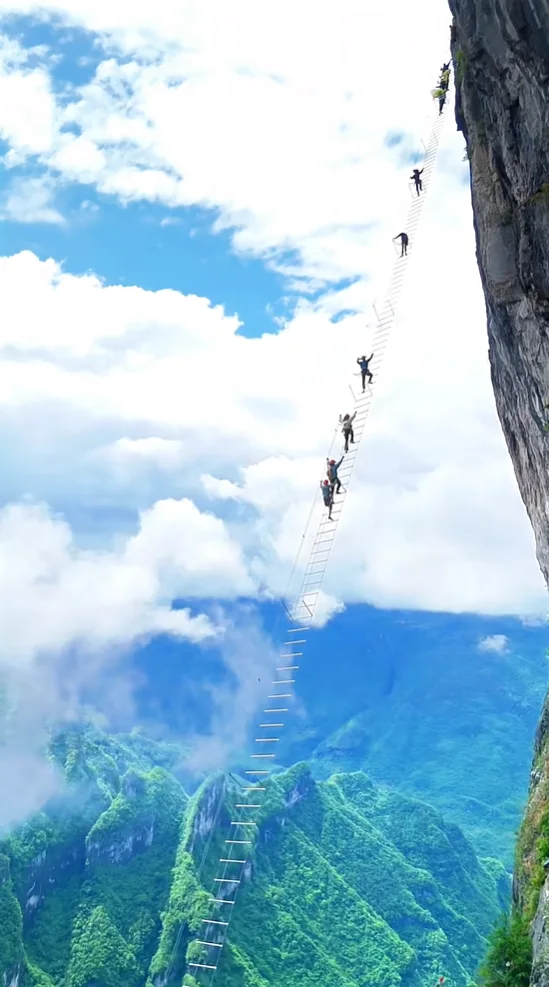
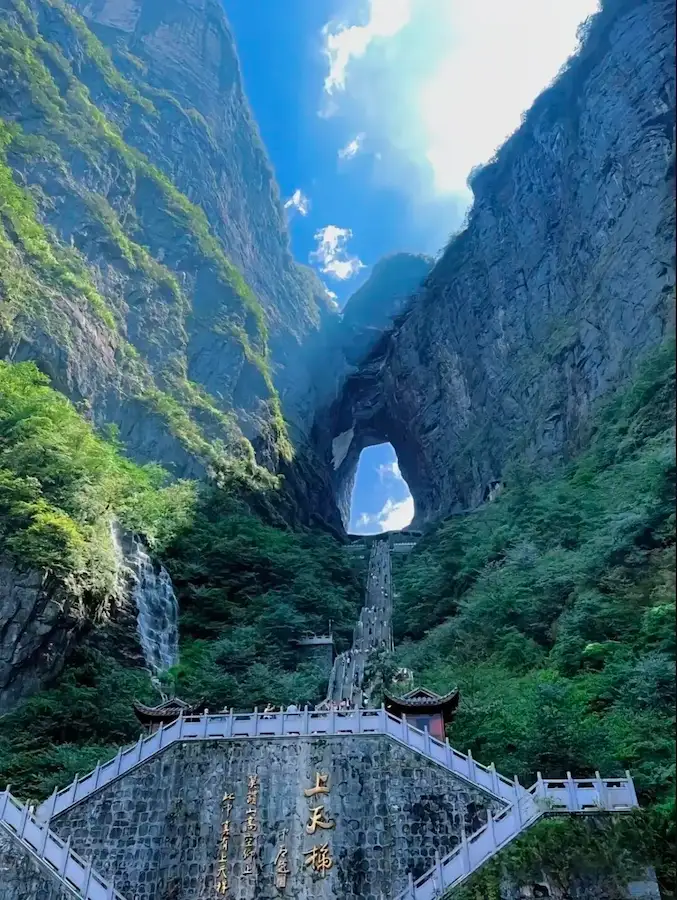
Don’t confuse the Qixing Mountain Sky Ladder with the 999-step Stairway to Heaven on Tianmen Mountain. That’s a stone staircase on a completely different mountain — you just walk up it, no gear required. The Sky Ladder on Qixing Mountain is a steel ladder that needs a harness and carabiners. The Zhangjiajie ladder, in other words, is not the Zhangjiajie staircase people climb on Tianmen. Two different mountains, two totally different experiences.
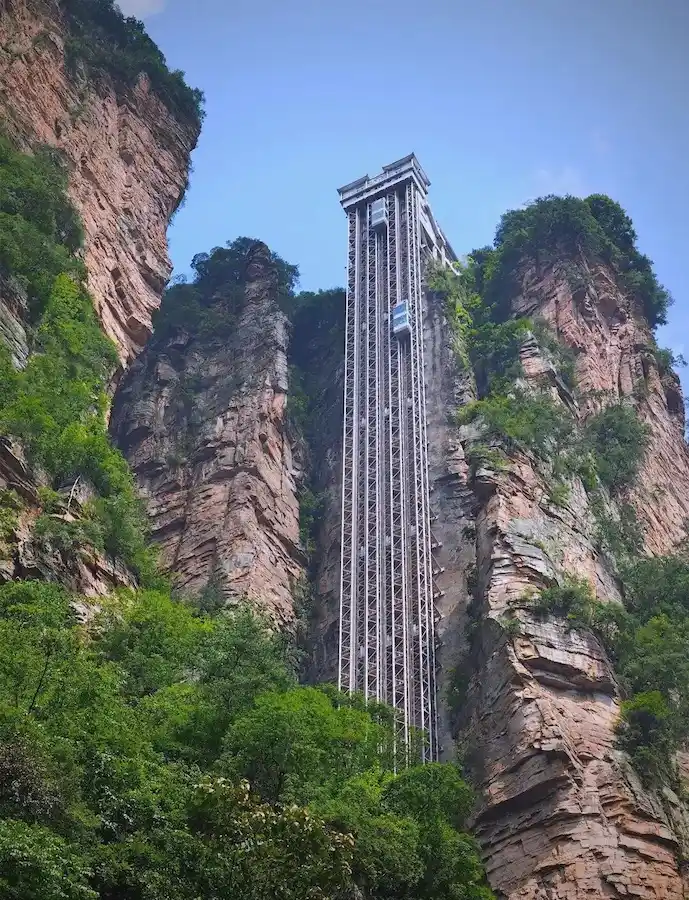
And while we’re clearing things up, the Bailong Elevator — the glass lift that shoots up a cliff inside Zhangjiajie National Forest Park — is also a separate thing entirely. This isn’t that.
Route 1 vs Route 2: Which Qixing Mountain Via Ferrata Should You Climb?
When you get to Qixing Mountain (also called Seven Star Mountain), the real decision is Route 1 or Route 2. Both are part of the big-wall via ferrata and start from the same gear station. The difference, in one line: Route 1 is the line with the ladder; Route 2 is the pure-endurance line. Whichever you pick, you’re doing the Zhangjiajie via ferrata — the question is just how hard you want it.
| Route 1 (Beginner) | Route 2 (Advanced) | |
|---|---|---|
| Includes the ladder? | Yes — the 168m Sky Ladder is the climax | No |
| Difficulty | Moderate, gentle gradient | High, with overhangs and wall traverses |
| Fitness | Average fitness is enough | Demanding — for people who exercise daily |
| Time | 2–3 hours | 3–4 hours (fit climbers can do it in ~2.5) |
| Drone photos | Yes — best for drone/FPV shots | Basically no, you hug the wall the whole way |
| Finish reward | Trophy | Medal |
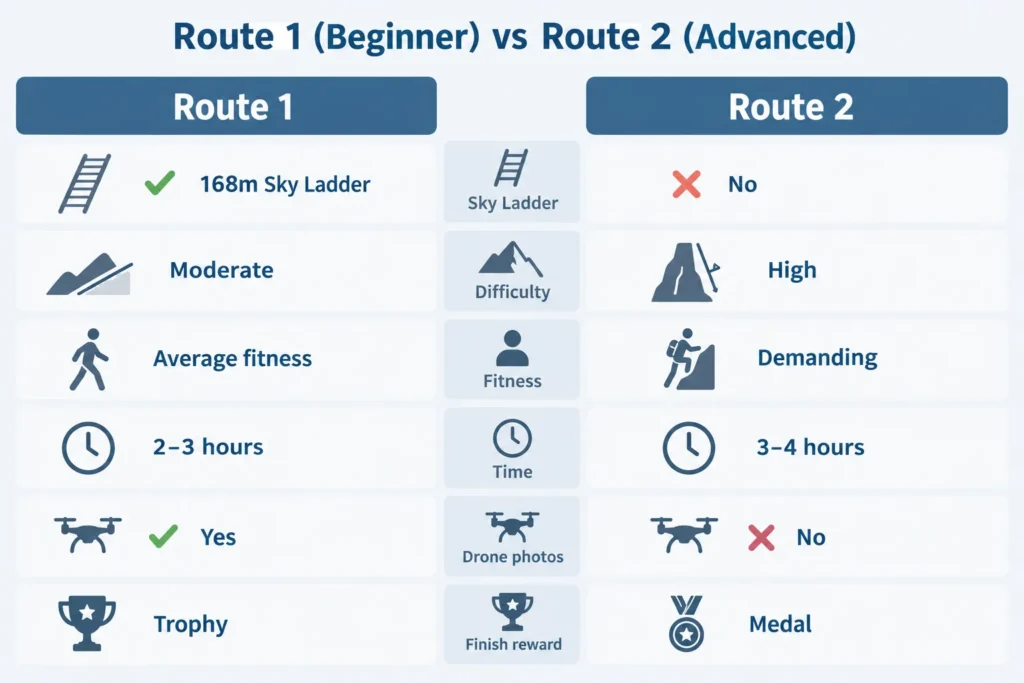
How to choose is straightforward: first-timers who want the ladder photos should take Route 1. People with via ferrata experience who want a serious physical test should take Route 2. Most visitors — including overseas travelers who came just for the Qixing Mountain Sky Ladder — are fine with Route 1, since the Zhangjiajie Sky Ladder sits at the end of it. Route 2 is for the veterans. Either way, this is the sky ladder zhangjiajie travelers fly across the world for.
Who Can Climb? Age, Height & Weight Limits
Not everyone can. Both routes have hard limits, and you have to meet all of them:
- Age 12–55 (minors must be accompanied by an adult the whole way)
- Height 1.4 meters or taller
- Weight under 100 kg (Route 2 recommends under 90 kg — it’s more physically demanding)
- No high blood pressure, heart conditions, severe acrophobia, pregnancy, or alcohol
Staff check your health status at registration before you clip onto the Zhangjiajie Sky Ladder. Don’t bluff your way through. This is not the place for it.
How Much Does the Zhangjiajie Sky Ladder Cost?
Let’s talk money, because the Zhangjiajie Sky Ladder price is the first thing people ask. Overseas visitors only need to know one number: 780 RMB (about 111 USD) for the all-inclusive package.
That price covers the scenic-area gate ticket, the round-trip cable car, the park shuttle bus, full via ferrata gear, a guide for the entire route, and a completion certificate or trophy. Foreign travelers can’t buy just the via ferrata without the cable car and entry, so 780 RMB is the closest thing to a true all-in price — no surprise fees after that. (Prices are subject to the official mini-program or real-time booking platforms in 2026.)
A few optional add-ons, if you want them: the tiankeng via ferrata at 380 RMB (54 USD), cave exploration at 480 RMB (69 USD), and an on-site drone package at 198–298 RMB (28–43 USD) for a 15–30 second FPV video plus edited photos. None of these are required. For other ticket costs around the park, see our Zhangjiajie National Forest Park tickets guide.
How to Book Your Sky Ladder Ticket
Booking ahead is essential. The park caps daily visitors at 150, so walk-up Zhangjiajie Sky Ladder tickets are often gone, especially on holidays. A few things matter:
- Book 1–7 days in advance — the earlier the better.
- Passport booking is hit-or-miss on some platforms. Channels that only accept a mainland phone number plus Chinese ID can’t process passports, so foreign visitors may need to line up at the ticket window. Leave time for that.
- Validate your ticket online after purchase, so you don’t queue for manual validation on site.
- Some local guides suggest adding the park staff on WeChat to reserve directly; a day before your visit they add you to a group chat where rules and photos are shared.
After you book, the day follows a fixed flow: visitor center → cable car up the mountain (about 8 minutes) → green shuttle bus to the via ferrata base → registration, gear-up, guide briefing → start climbing the Zhangjiajie Sky Ladder → shuttle plus cable car down → collect your certificate or trophy.
Your Step-by-Step Day
Timing is where people get burned. Watch these cutoffs:
- Latest ticket exchange at the visitor center: 13:00 (earlier if you still need to sort passport exchange at the window).
- Arrive at the via ferrata entrance after 14:00 and you can only do the ladder section — the cliff climb and wire bridge before it are closed.
- After 15:00, all entry stops.
So if you want the full route, go early. Aim to be at the cable car station before 8:30 to beat the tour groups. The queue at the ladder entrance runs 20–30 minutes off-peak, and can stretch past an hour in high season.
How to Get to Qixing Mountain
Qixing Mountain (Seven Star Mountain) is close to Zhangjiajie city but not great by public transport, so a taxi is the most reliable way. Wondering where to go to start Zhangjiajie via ferrata? Head for the Qixing Mountain cable car station.
- City center / downtown hotel → Qixing Mountain cable car station: about 30 minutes, 40–50 RMB (6–7 USD).
- Zhangjiajie West Railway Station → cable car station: 40–50 minutes, 70–90 RMB (10–13 USD).
If you’d rather not taxi, Huatian Hotel runs a shuttle bus to and from the park every day from 09:00 to 16:00, about every 30 minutes. For getting to Zhangjiajie itself, see our full guide on how to get to Zhangjiajie.
What It Feels Like Halfway Up the Sky Ladder
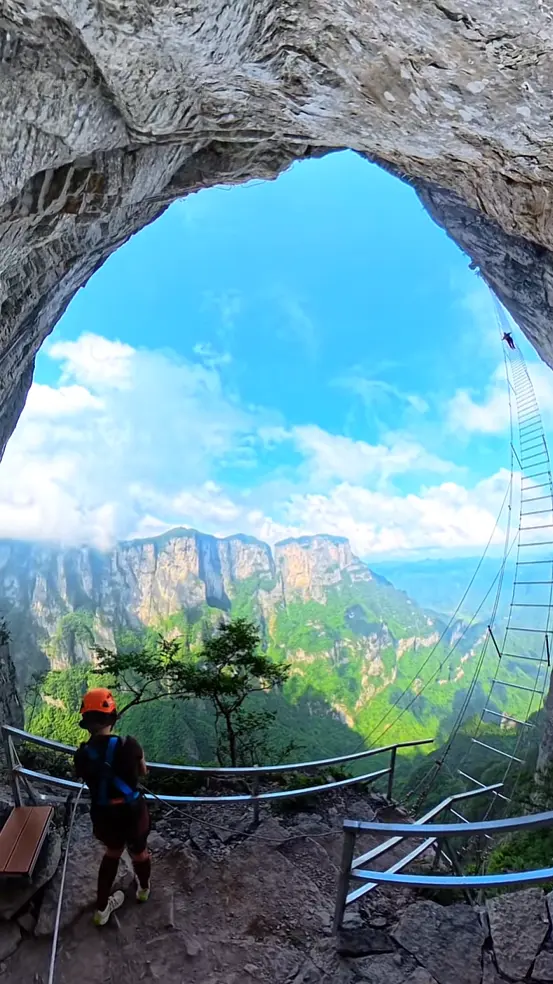
Let’s be honest: this route is genuinely intense for regular people. As a Chinese local who has visited Zhangjiajie many times, I’ve stood at the via ferrata entrance and watched the harness-up area for the Zhangjiajie Sky Ladder — and just looking up from below is enough to understand why people’s legs shake.
For what it feels like mid-climb, I’d rather quote the people who actually did it:
- Arnaud Boutet, a France 2 journalist who climbed the full route, called it “like walking in the clouds,” and noted that climbers go up in guided groups of around 12 — “every time someone comes up, the whole thing sways.”
- Travel bloggers Kara and Nate filmed a first-person video with 1.8 million views; the sideways sway is strongest at the middle of the ladder, because it’s suspended and doesn’t touch the rock, so there’s no solid ground under your feet. If you’ve searched “sky ladder zhangjiajie” on YouTube, their video is probably the one you found.
- The Douyin meme “body in the air, soul chasing behind” nails the foggy days: when clouds roll in, the drop below vanishes and the fear actually eases — but the wind shakes the Qixing Mountain Sky Ladder harder, which is its own kind of pressure.
- One Korean visitor’s account is brutally honest: at the ticket counter she kept asking staff “can this kill you?”, got up there, froze after two steps, and finished crying that she only survived because she was lucky. It’s a joke, but it tells you the mental test is tougher than the physical one.
On a clear day, you get the sea of clouds and Zhangjiajie’s signature karst peaks below — a view you won’t get anywhere else. That’s what makes the Zhangjiajie via ferrata one of China’s top via ferratas. Just don’t treat it as a casual lookout platform. It’s a real physical and mental drain.
5 Things Nobody Tells You Before You Go
1. If the person ahead freezes, you just wait. Your carabiners are locked to a shared steel cable the whole way, so there’s no overtaking. When the climber in front stops for photos or panic, the whole line behind them stalls. If you’ve watched clips of the sky ladder in Zhangjiajie, you’ve probably seen the queue — it’s worst at the ladder section, where you can wait over an hour in high season. Steel yourself for it.
2. After 14:00, it’s ladder-only. I said it above, but it’s worth repeating: show up at noon for the Zhangjiajie Sky Ladder and you’ll likely only get half the route.
3. There’s basically no toilet on the route. Once you’re harnessed up, a mid-climb bathroom break is almost impossible — the only one is near the via ferrata start, and it’s awkward in full gear. Sort this out at the cable car station before you gear up.
4. Shoes and gloves are everything. The free gloves are thin cotton — smelly and not grippy — and the ones sold on site are too thin. Bring your own sturdy mountain-bike or climbing gloves. And don’t wear flat canvas sneakers: the steel rungs get slippery in mist. Wear grippy sports shoes, long pants, long sleeves (to protect your knees from the rock).
5. Book the drone photos in advance. Those epic ladder shots are almost all aerial. The on-site drone package is 198–298 RMB, but pilots and positions are limited, so reserve early in high season. Route 1 is drone-friendly; Route 2 hugs the wall so you basically can’t get aerial shots — if you want photos, take Route 1.
Two small extras: the start gate closes behind you and it’s one-way — you can’t turn back mid-route, so rescue is your only exit, which means be sure before you start. And remove necklaces and earrings, empty your pockets first; valuables go in the lockers at registration.
FAQ: Sky Ladder Questions, Answered
Is it real, or is it CGI?
It’s real. The Zhangjiajie Sky Ladder has been open since November 2024 and was filmed on-site by CCTV, CNN, BBC, and France 2. It’s a real operating via ferrata, not a render.
How long does the whole climb take?
Route 1 takes about 2–3 hours, Route 2 about 3–4 hours — not counting queue time. (That’s for the full sky ladder zhangjiajie route, ladder included.)
Is it safe? Has anyone died?
Search “Zhangjiajie Sky Ladder deaths” and you’ll see it’s one of the most common worries before booking. The honest answer: the route uses a full harness, twin carabiners, and a 12mm steel lifeline running the entire way (a “double lifeline” system), with locks designed so they can’t both open at once. Daily numbers are capped, and it closes in winds above force 6. In practice the bigger risks are slips, exhaustion, and bad weather — not the cable failing. If you’re acrophobic or have heart issues, this isn’t for you.
Can you fall?
Normally no — your carabiners stay clipped to the cable the whole way on the Qixing sky ladder. What you actually have to watch for is slips and knocks, exhaustion, and extreme weather. Know your limits.
Is this the same as Tianmen Mountain’s “Stairway to Heaven”?
No. That’s a 999-step stone staircase on Tianmen Mountain, and you just walk it. This is the Qixing Mountain ladder — the sky ladder qixing mountain is famous for — and it needs a harness and carabiners. Two mountains, two things.
When’s the best time to go?
Spring (March–May) and autumn (September–November) are most comfortable. The sea of clouds is most likely the morning after rain clears, and it’s thickest between 08:30 and 10:30.
If all you want is one photo of yourself suspended above the sea of clouds, then: Route 1, arrive early, book a drone shot — and you’ll have social content for three months. As for whether 780 RMB is worth it, some people come down from the Zhangjiajie Sky Ladder saying it cured their burnout, and others say they paid to feel their heart stop. You decide. If you’re afraid of heights, genuinely, don’t go.
While you’re in Zhangjiajie, the Zhangjiajie Glass Bridge and the zipline are other ways to test your nerves, and there’s a full list of things to do in Zhangjiajie worth a look.
Hi, I'm Ke Ping — let me plan your Zhangjiajie trip
Certified China Travel Specialist · Certificate details
Instead of spending hours piecing everything together, I'll build the perfect itinerary for you — tickets, transport, and the spots most tourists miss.
📋 Plan My Zhangjiajie Trip
Hi, thanks for the guidelines and tips for the Sky Ladder. Are visitors allowed to wear a gopro or camera during their climb on either Route 1 or Route 2?
Thanks!
Hi! Thank you for the comment, and I’m so glad you found the guide helpful!
Regarding bringing a GoPro or camera on Route 1 or Route 2:
Yes, visitors are allowed to bring action cameras (like GoPros) or smartphones during the climb, but strict safety rules apply:
1.Must Be Securely Tethered: All devices must be attached to your body using a safety wrist strap, neck lanyard, head strap, or chest mount. Unsecured or handheld devices are strictly prohibited to prevent accidental drops on climbers below.
2.No Heavy Equipment: DSLRs, professional cameras, and tripods are not permitted on the climbing routes.
3.Keep Hands Free: You’ll need both hands to operate safety carabiners and hold onto the steel cables, so chest or helmet mounts are the best option for capturing hands-free POV footage.
Tip: There are also official drone follow-me / photo services available on-site if you want high-quality third-person footage of your climb.
Hope this helps! Have an amazing and safe climb in Zhangjiajie!